ILS Data Breach Settlement Guide
Independent Living Systems experienced a severe network intrusion during the summer of 2022. This specific event exposed the private medical records of over four million individuals. Consequently, affected consumers filed multiple legal complaints against the healthcare provider. This disruption eventually led to the massive ils data breach settlement agreement.
The 2022 Healthcare Security Incident
Initial Discovery and System Intrusion
Independent Living Systems experienced a massive network intrusion during the summer of 2022. The company provides administrative support services to various healthcare plans across Florida. Hackers successfully accessed internal network systems between June 30 and July 5.
The IT department initially discovered the unauthorized network access on July 5. System administrators noticed widespread inaccessibility across multiple digital platforms. They immediately hired outside forensic specialists to investigate the digital intrusion.
The primary goal was to contain the infected servers quickly. This immediate action stopped further digital damage from spreading across the network. However, the attackers had already acquired massive amounts of sensitive data.
Stolen Patient Health Information
The stolen digital files contained highly sensitive personal and medical information. Specifically, the attackers extracted full names and Social Security numbers. This security failure also exposed dates of birth and taxpayer identification numbers.
Furthermore, the hackers acquired protected health information and medical records. Stolen data included specific medical diagnoses and health insurance billing details. They also exposed Medicare and Medicaid identification numbers.
This specific data combination is incredibly valuable on the dark web. Identity thieves use medical information to file fraudulent insurance claims. This exposure created massive permanent risks for millions of vulnerable patients.
Delayed Notification and Public Backlash
The data breach affected over 4.2 million individuals across the country. This staggering number makes it one of the largest healthcare breaches recorded. Despite discovering the breach in July, the company delayed public notification.
Independent Living Systems finally mailed official notification letters on March 14, 2023. This massive delay left millions of consumers completely vulnerable for eight months. Consequently, the company faced intense public scrutiny and anger.
Victims expressed extreme frustration over the slow corporate response time. They felt the company did not value their personal privacy. This delayed notification directly triggered immediate legal action from affected consumers.
The Class Action Legal Response
Consolidated Federal Court Action
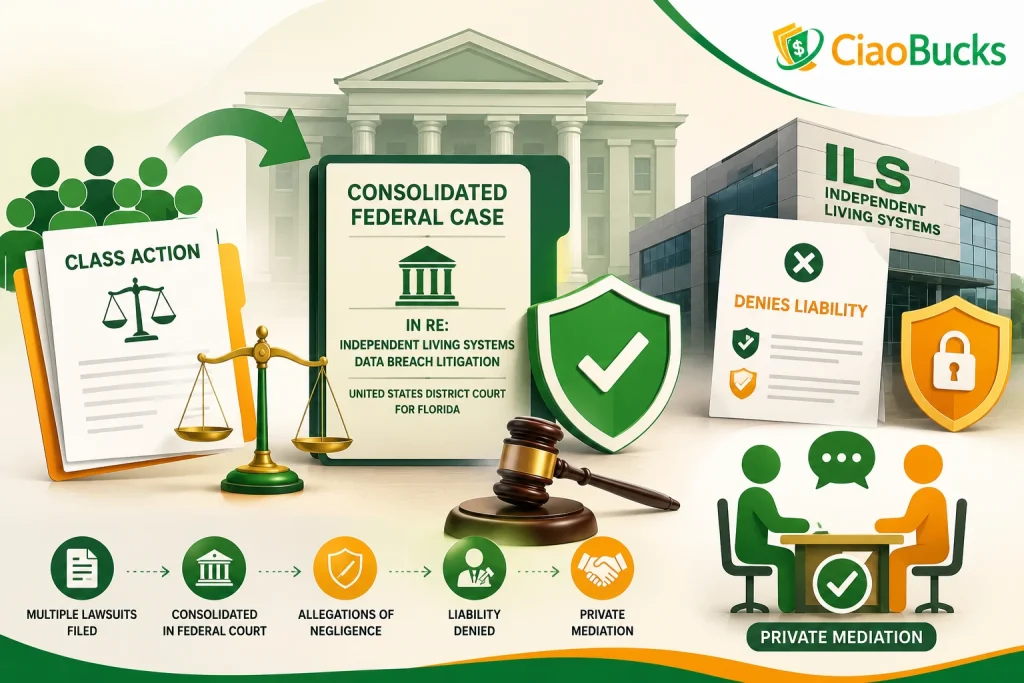
Affected individuals quickly filed multiple class action lawsuits against the company. The first legal complaint was officially filed on March 17, 2023. These individual lawsuits made similar claims regarding corporate negligence.
The courts eventually combined these individual filings into one single federal action. The official legal case is In re Independent Living Systems Data Breach Litigation. It currently resides in the United States District Court for Florida.
Consolidating the cases speeds up the legal process for everyone involved. It prevents different judges from issuing conflicting rulings on the same facts. This unified approach forced the company to take the allegations seriously.
Allegations of Corporate Negligence
The consolidated lawsuit alleged that the company maintained inadequate cybersecurity practices. Plaintiffs claimed the provider failed to protect their personal health information. They accused the company of ignoring standard industry security guidelines.
The legal filings also pointed out a lack of basic data encryption. Lawyers argued the company failed to implement reasonable safeguards against digital threats. This failure directly allowed the hackers to easily bypass internal network controls.
Furthermore, plaintiffs highlighted the delayed public notification timeline. They argued this delay prevented them from taking immediate protective measures. This specific negligence claim formed the core of the legal argument.
Independent Living Systems Denies Liability
Independent Living Systems strongly denies all liability and alleged legal wrongdoing. The corporate legal team filed multiple motions to dismiss the lawsuits entirely. They argued that the plaintiffs could not prove direct financial harm.
The company insists it did not violate any consumer privacy laws. Furthermore, they claim their security measures met standard legal requirements. However, the federal judge rejected their primary motion to dismiss the case.
Avoiding a lengthy public trial remained a top priority for corporate executives. A public trial would expose sensitive internal corporate communications. Therefore, both sides eventually agreed to enter private mediation sessions.
Breakdown of the Financial Agreement
Establishing the Settlement Fund
Both legal parties reached a mutual agreement after two separate mediation attempts. Independent Living Systems agreed to establish a $14 million cash fund. This massive fund completely resolves the pending class action claims.
The agreement officially provides specific financial benefits to all eligible class members. This money covers compensation, administration costs, and expensive attorney fees. The distribution rules ensure victims receive fair financial relief.
The court granted preliminary approval for this financial deal on July 3, 2025. This approval signals that the proposed terms meet standard legal requirements. The massive fund size reflects the severity of the medical data exposure.
Claims for Out-of-Pocket Expenses
The settlement agreement provides reimbursement for documented financial damages. Victims can claim up to $5,000 for verified out-of-pocket losses. These expenses must result directly from the 2022 data exposure.
Eligible expenses include credit monitoring fees and unauthorized bank charges. Claimants can also request reimbursement for overdraft fees or notary costs. Furthermore, victims dealing with identity theft can submit bank documentation for repayment.
Alternatively, claimants can select a standard pro-rata cash payment instead. This option does not require extensive financial documentation or receipts. The administrator will calculate this exact amount after tallying all approved claims.
Special Rules for California Residents
The settlement agreement includes very specific rules for California residents. California enforces strict state-level consumer privacy protection laws. Therefore, residents of this state receive slightly different financial compensation.
Class members residing in California will receive a double pro-rata cash payment. This means their final cash share will be twice the standard amount. This specific provision addresses the unique statutory damages allowed under California law.
All final class action settlement payouts are subject to pro-rata reductions. This means individual payments are reduced proportionally if claims exceed the fund. This mathematical adjustment prevents the total payouts from exceeding the financial cap.
Settlement Claims and Approval Process
Kroll Settlement Administration LLC
The court appointed a neutral settlement administrator to handle the funds. Kroll Settlement Administration LLC manages the complete payout distribution process. This agency reviews all submitted claim forms for total accuracy.
They ensure that only legitimate victims receive compensation from the designated fund. Furthermore, the administrator handles all public inquiries and phone calls. They also manage the official legal documentation and secure web portal.
This strict administrative oversight actively prevents fraudulent claims from draining the funds. The team verifies every single bank statement submitted by claimants. Their detailed work ensures a fair distribution process for all class members.
Submitting Documentation for Losses
Class members must follow strict instructions when submitting financial claims. Filing an expense claim requires clear supporting documentation. Acceptable proof includes official bank statements, credit card bills, or formal invoices.
The administrator will reject claims lacking proper financial evidence. Therefore, claimants must carefully organize their records before submitting the online forms. The official legal process is always free for all affected consumers.
Consumers must avoid third-party websites that demand a fee to file paperwork. You should always use the official settlement website for all submissions. This precaution protects victims from secondary phishing scams and online fraud.
Final Court Approval Dates
The legal settlement follows a strict timeline approved by the federal judge. The final deadline to submit all formal claim forms is November 4, 2025. Missing this deadline results in a complete loss of financial compensation.
The court scheduled the final approval hearing for November 17, 2025. United States District Judge Kathleen M. Williams will preside over this hearing. She will determine if the final distribution plan is fair and adequate.
Approved payments will go out shortly after the final hearing concludes. Claimants must cash their settlement checks before the printed expiration date. Any uncashed checks will become completely void and unusable afterward.
Security Upgrades and Future Protection
Investments in Digital Defense
Independent Living Systems initiated massive internal changes following the breach. The company reportedly spent over $2 million to upgrade its digital security. These financial investments aim to prevent future network intrusions.
Corporate leaders replaced outdated legacy servers with modern hardware. They also hired dedicated cybersecurity experts to monitor daily network traffic. These new teams actively hunt for hidden digital threats around the clock.
This massive financial commitment shows a renewed focus on patient privacy. The company realizes that another breach could destroy its business entirely. Therefore, protecting digital assets is now their primary corporate objective.
Firewalls and Password Controls
The security upgrades include significantly stronger external firewalls. These firewalls block unauthorized international traffic from accessing internal servers. The IT department also implemented much stricter password complexity requirements.
Employees must now rotate their secure passwords every thirty days. Furthermore, the company mandated two-factor authentication for all remote system access. This specific control blocks hackers even if they steal user passwords.
These simple steps drastically reduce the chances of a secondary cyberattack. Corporate security experts regularly audit these new systems for hidden vulnerabilities. The entire workforce also undergoes mandatory monthly digital security training.
Donating Unused Settlement Funds
Class action settlements often have leftover money after paying all claims. This happens when victims fail to cash their final settlement checks. The legal agreement outlines a specific plan for these unused funds.
Any remaining money will not return to Independent Living Systems. Instead, the unused funds will go directly to the Alzheimer’s Association. This charitable donation is known as a cy pres distribution.
The court selected this specific charity due to its relevance. The healthcare provider primarily serves vulnerable elderly populations and Medicare patients. Therefore, donating to Alzheimer’s research directly benefits the affected demographic.
Important Legal Rights and Deadlines
Meeting the Claim Deadline
Consumers must stay actively informed about all upcoming legal deadlines. The strict deadline to submit a claim is November 4, 2025. You must file your paperwork online or postmark it by this date.
Late submissions will not receive any financial compensation from the fund. The court does not grant extensions for forgotten paperwork or delayed mail. Therefore, completing the forms early is highly recommended for all victims.
Checking the official web portal regularly ensures you never miss a window. Accurate information protects consumers from losing their legal rights. You should keep copies of all submitted documents for your personal records.
Opting Out or Objecting
Class members have several legal options during this specific settlement period. You can choose to opt out of the settlement entirely. The strict legal deadline to opt out is October 6, 2025.
Opting out allows individuals to pursue separate private litigation against the company. However, few people choose this route due to extreme legal costs. Alternatively, you can file a formal objection to the settlement terms.
Objecting allows you to tell the judge why the agreement is unfair. The deadline to file a legal objection is also October 6, 2025. Doing nothing means you accept the terms but receive zero financial compensation.
Finding Official Forms Online
Finding reliable lawsuit information is necessary for a successful claim. You should always consult a verified class action settlement database. These secure databases track payout dates and claim submission deadlines accurately.
The official website for this case is ILSDataBreachSettlement.com. This is the only authorized portal approved by the federal court. You can safely download official claim forms directly from this site.
Do not submit sensitive financial information through unsecured email addresses. Always use the encrypted submission forms provided by the settlement administrator. Protecting your remaining data is a vital part of the recovery process.
Comparing Recent Healthcare Breaches
The Rising Threat to Medical Data
The healthcare industry currently faces an unprecedented wave of cyberattacks. Criminals increasingly target medical providers over traditional financial institutions. Medical records contain a wealth of permanent personal data.
Unlike credit card numbers, you cannot easily change your medical history. This makes healthcare data incredibly valuable on underground digital markets. The regents-accellion data breach settlement notice highlighted similar industry vulnerabilities recently.
Hackers use this data to launch highly targeted extortion campaigns against patients. They threaten to release private medical diagnoses unless victims pay ransoms. This growing trend requires massive changes in corporate cybersecurity defense strategies.
Financial Fallout for Healthcare Providers
Data breaches cause massive financial damage to healthcare organizations. Providers face extreme legal costs and regulatory fines following an exposure. The $14 million ILS agreement is just one recent example.
Companies must also pay for expensive forensic investigations and system repairs. Additionally, they lose massive amounts of revenue due to temporary system outages. The panera data breach settlement proves that all industries face these costs.
Many smaller healthcare providers go completely bankrupt after a major breach. Cyber liability insurance premiums have also skyrocketed across the entire medical sector. These massive financial pressures force companies to finally prioritize digital security.
Impacts on Vulnerable Patient Groups
Healthcare breaches disproportionately affect highly vulnerable patient populations. Elderly individuals often lack the digital literacy to monitor their credit files. Therefore, they become easy targets for aggressive identity thieves and scammers.
Criminals use stolen Medicare numbers to bill the government for fake services. This medical fraud can disrupt a patient’s access to legitimate care. Another recent case, the reventics data settlement, showed similar impacts on patients.
Advocacy groups continue demanding stricter federal penalties for negligent healthcare providers. They argue that current regulations do not properly protect vulnerable citizens. Protecting patient privacy must become a fundamental requirement for all medical operations.
Identity Protection Strategies for Victims
Reviewing Medical Billing Statements
Victims of healthcare breaches must take aggressive protective action immediately. You must review all medical billing statements very closely. Watch for unknown services or strange doctor visits on your insurance explanations.
Criminals often use stolen identities to obtain expensive prescription drugs or surgeries. If you notice strange billing codes, contact your insurance provider instantly. Early detection is your absolute best defense against medical identity theft.
You should also request a complete copy of your current medical records. Review these files for any inaccurate diagnoses or unknown blood types. Correcting these malicious errors prevents potentially deadly medical treatment mistakes later.
Setting Up Credit Monitoring
You should enroll in reputable credit monitoring services immediately. These digital services automatically alert you when someone uses your identity. The settlement fund may cover the exact costs of these protective services.
Tracking your credit score helps you spot fraudulent loans or credit cards. Criminals frequently open new financial accounts using stolen Social Security numbers. You must aggressively dispute any unknown accounts appearing on your credit report.
Many victims spend hundreds of hours repairing their damaged financial profiles. Professional credit monitoring catches these illegal activities before they cause permanent damage. This simple step provides massive peace of mind for anxious victims.
Placing Fraud Alerts on Accounts
Place a temporary fraud alert on your primary credit files today. You can easily do this by directly contacting Equifax, Experian, or TransUnion. This alert warns banks that your identity is currently at risk.
Consider placing a complete credit freeze to stop criminals entirely. A security freeze blocks identity thieves from exploiting your stolen data. It stops banks from pulling your credit profile without your explicit permission.
A credit freeze is entirely free and protects your long-term credit score. You can quickly lift the freeze whenever you apply for a loan. This specific precaution gives you total control over your private financial records.
Frequently Asked Questions
Who Is Included in the Class?
The settlement class includes all United States residents affected by the breach. Your sensitive personal information must have been exposed during the 2022 incident. The administrator estimates there are approximately 3.9 million eligible class members.
What Are the Payout Limits?
Approved claimants can receive up to $5,000 for documented out-of-pocket financial losses. Alternatively, class members can choose a standard pro-rata cash payment instead. California residents qualify for a double share of the remaining settlement fund.
When Are the Legal Deadlines?
The strict deadline to submit a claim form is November 4, 2025. You must file an objection or opt-out request by October 6, 2025. The court scheduled the final approval hearing for November 17, 2025.
Will Uncashed Checks Expire?
Yes, all lawsuit settlement checks have a strict printed expiration date. You must deposit or cash the bank check before this specific date. Any completely uncashed checks will become void and will not be reissued.
Final Takeaways
The Independent Living Systems data breach exposed millions of highly sensitive medical records. This massive failure forced the healthcare provider to establish a $14 million settlement. Affected consumers must gather their financial documentation and submit claims before November 2025. Checking official legal portals regularly ensures victims secure their rightful financial compensation quickly.
Furthermore, this incident highlights the growing digital threats facing the modern healthcare industry. Providers must implement stronger internal controls to protect patient health information from hackers. Consumers must also take aggressive proactive steps to monitor their personal credit files. Setting up fraud alerts minimizes the permanent damage caused by corporate security failures.