Panera Data Breach Settlement News
Panera Bread faced massive cybersecurity challenges over the past two years. A severe system failure exposed the private records of nearly 150,000 workers.
Consequently, this disruption led to a finalized panera data breach settlement. The settlement administrator issued the final compensation payments on May 29, 2026.
However, the company recently suffered another massive breach in January 2026. This new cyberattack specifically targeted customer accounts.
Hackers exposed the contact details of over five million unique consumers. Therefore, these major incidents triggered multiple lawsuits and settlements across the industry.
The financial damage continues to grow as more victims come forward. Both workers and customers are demanding accountability from the corporate offices.
The 2024 Employee Security Incident
The Initial March 2024 Cyberattack
The initial cybersecurity crisis started on March 23, 2024. Unauthorized actors broke into internal company computer networks.
As a result, the attackers successfully bypassed standard corporate security controls. The company noticed immediate system outages across online ordering platforms.
Panera quickly launched an internal investigation to uncover the root cause. Cybersecurity forensic experts worked fast to contain the widespread network intrusion.
The primary goal was to isolate the infected servers. This specific action stopped further digital damage across the network.
Investigators spent weeks analyzing the breach entry point. They discovered that old security credentials allowed the hackers to slip inside undetected.
Digital security teams worked through the night to patch the holes. Corporate operations suffered major delays during this recovery phase.
Employees and Stolen Information
The stolen digital files contained highly sensitive personal information. Specifically, the attackers extracted full names and Social Security numbers.
This security failure primarily impacted current and former Panera workers. Only a small fraction of general customers were caught in this early breach.
Meanwhile, Panera sent official notification letters to affected individuals. These legal notices finally arrived in June 2024.
The delayed notification frustrated many workers who were left completely vulnerable. Consequently, the company faced intense public scrutiny from labor groups.
Many workers expressed anger over the slow corporate response. They felt the company did not value their personal privacy.
Corporate leaders promised to upgrade their internal storage systems immediately. However, the damage to employee trust was already done.
Immediate Financial Impact on Victims
Many victims noticed suspicious financial activity soon after the breach. Criminals often test stolen data using very small transactions.
For example, some individuals reported a 18337823729 charge on credit card shortly after their records were exposed. This exposure caused a massive alarm.
Quick financial monitoring became strictly necessary for thousands of workers. Identity thieves rapidly monetized the stolen Social Security numbers.
Ultimately, the financial impact extended far beyond a few isolated credit card disputes. Rogue charges began appearing on bank accounts nationwide.
Victims spent hours on the phone with fraud departments. Many had to close their primary checking accounts entirely to stop the bleeding.
The emotional stress of identity theft weighed heavily on the affected staff. Many required professional assistance to clear their names.
The Resulting Class Action Lawsuit
These events directly triggered a massive panera class action lawsuit. Multiple plaintiffs quickly filed legal complaints in federal court.
Legal representatives claimed the food chain failed to protect basic employee data. The filings accused the company of failing to train employees.
Lawyers also pointed out missing data encryption standards. Furthermore, this legal fight joined a growing list of recently settled lawsuits.
The intense legal pressure finally forced the company to negotiate. Defense lawyers realized a trial would damage the corporate brand even further.
Both parties wanted to resolve the matter outside of open court. This decision paved the way for a formal financial agreement.
Breakdown of the Financial Agreement
The Consolidated Legal Case
The courts combined the multiple filings into one consolidated legal action. The official case name is In re: Panera Data Security Litigation.
This case was filed in the United States District Court for Missouri. Panera strongly denies all liability and alleged wrongdoing.
The company insists it did not violate any consumer privacy laws. However, avoiding a lengthy public trial remained a top priority.
Therefore, both sides agreed that early mediation was the best path forward. A retired judge helped guide the settlement discussions over several weeks.
The legal teams spent months reviewing data security audits before signing the final deal. This agreement settled all outstanding employee claims from that specific period.
Maximum Financial Payouts for Victims
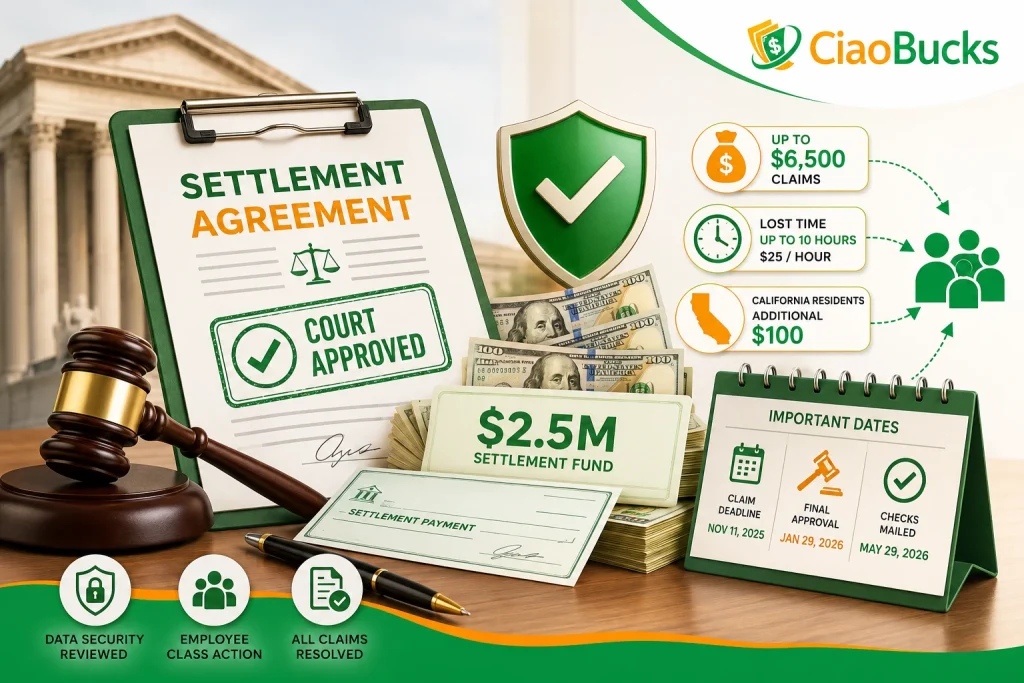
Both parties reached a mutual agreement during a private mediation session. Panera agreed to establish a $2.5 million fund.
This fund funded the class action settlement. The agreement provided specific financial benefits to all eligible class members.
The maximum reimbursement for ordinary out-of-pocket expenses was $500 per person. Class members could also claim up to $6,500 for extraordinary documented losses.
This higher tier required hard proof of direct identity theft. Additionally, the settlement fund covered all attorney fees and administrative costs.
The distribution rules ensured that the most severely harmed victims received the largest checks. This fund was completely exhausted by the approved claims.
Compensation for Lost Time and Fraud
Victims dealing with severe financial damages could submit bank documents for reimbursement.
If a victim disputed a fraudulent lagosec inc charge on credit card, they could claim those specific losses.
The settlement also provided fair compensation for lost personal time. Individuals could claim up to 10 hours of lost time.
This time was valued at $25 per hour. Meanwhile, eligible California residents could claim an additional $100 statutory payment.
These payouts helped cover the stress and effort required to restore frozen credit profiles. The money provided a small sense of relief to the workers.
Final Legal Approval and Key Deadlines
The legal settlement followed a strict timeline approved by the court. The final deadline to submit all settlement claims was November 11, 2025.
United States District Judge Henry Edward Autrey granted final approval. This legal hearing occurred on January 29, 2026.
Subsequently, the settlement administrator mailed the official lawsuit settlement check payments. These checks went out on May 29, 2026.
Any uncashed checks will become completely void after July 28, 2026. Claimants cannot request reissued checks afterward.
The court closed the case files permanently after the final checks were sent. No further extensions will be granted to late applicants.
Processing and Tracking Class Action Compensation
The Role of the Settlement Administrator
The court appointed a neutral settlement administrator to handle all funds. Kroll Settlement Administration LLC managed the complete payout distribution.
This agency reviewed all submitted claim forms for accuracy. They ensured that only legitimate victims received compensation from the fund.
Furthermore, the administrator handled all public inquiries. They also managed the official legal documentation and the secure web portal.
This strict oversight actively prevented fraudulent claims from draining the funds. The team verified every bank statement submitted by claimants.
Their work ensured a fair distribution process for all legal class members.
Calculating Pro Rata Reductions
All final class action settlement payouts were subject to pro-rata reductions. This means individual payments were reduced proportionally.
This adjustment prevents the total payouts from exceeding the financial cap. Thousands of victims successfully submitted forms to receive these benefits.
The residual cash payments were originally capped at $250 per person. However, massive victim participation rates often lower the final payout amounts.
Therefore, pro-rata adjustments remain a standard feature in modern class action settlements. The administrator calculates these rates using automated software.
This mathematical formula ensures that every approved claimant gets a fair percentage.
Options for Affected Class Members
Class members had several legal options during the settlement period. They could submit a claim, opt out, or object to the terms.
The strict deadline to opt out or object was October 13, 2025. Opting out allowed individuals to pursue their own separate litigation.
Few individuals choose this route due to high private litigation costs. Conversely, doing nothing resulted in zero financial compensation.
Those who did not object gave up their right to sue the company in the future. The choices made during this period determined their final legal standing.
Finding Reliable Lawsuit Information
Consumers must rely on completely accurate sources for class action updates. You should always consult a verified class action settlement database.
These databases track payout dates and claim submission deadlines accurately. Avoid third-party websites that demand a fee to file your paperwork.
The official legal process is always free for affected consumers. Always use the official settlement website for form submissions.
Checking these portals regularly ensures you never miss a critical filing window. Accurate information protects consumers from online fraud and phishing traps.
The January 2026 ShinyHunters Cyberattack
A Second Massive Data Breach
Panera faced another catastrophic security incident shortly after resolving the 2024 case. The company confirmed a second massive data breach in January 2026.
The cybercriminal syndicate ShinyHunters claimed full responsibility for this attack. The hackers reportedly breached the system using a single sign-on vulnerability.
This second attack was significantly larger than the first incident. Consequently, it exposed a severe lack of long-term security improvements.
The corporate board faced immediate calls for leadership changes following the news. Stock prices dipped as investors reacted to the secondary breach.
Public confidence fell to an all-time low as headlines spread across the nation.
Stolen Customer Contact Details
The hackers successfully stole approximately 14 million internal company records. This massive breach exposed the personal data of 5.1 million unique customers.
The compromised customer data included full names, email addresses, and phone numbers. Fortunately, the attackers did not access full credit card numbers.
However, the exposed contact details still pose a massive privacy risk. Criminals frequently use this basic information to launch targeted phishing campaigns.
The stolen records were compiled into a large database and sold online. This exposure put millions of loyalty program members at risk.
Many customers deleted their digital apps out of fear.
Extortion Threats Directed at Consumers
The fallout from this customer data leak was immediate and severe. Millions of consumers found their private contact information exposed online.
Victims began receiving targeted extortion emails in late January 2026. These aggressive messages threatened to misuse personal information.
The attackers demanded that victims pay a ransom fee. The food service industry is closely watching this breaking settlement news.
Corporate security experts warn users never to reply to these threats. Paying the hackers only encourages further digital extortion attempts.
Federal agencies are actively tracking the digital wallets used by the syndicate.
New Legal Actions Unfolding Rapidly
Multiple new legal complaints were quickly filed in Missouri federal court. These new lawsuits specifically target the 2026 customer data exposure.
They are completely separate from the finalized 2024 employee lawsuit settlement. Legal experts expect these individual cases to consolidate soon.
Consumers should closely watch for updates regarding these pending class action settlements. These current class action settlements will likely take years to resolve.
The new legal teams are seeking much higher financial damages this time around. Punitive damages could be applied due to corporate negligence.
Protecting Your Identity After a Corporate Leak
Updating Account Passwords Immediately
Individuals affected by either Panera data breach must take protective action. Stolen contact details create permanent fraud risks that do not expire.
You should immediately update passwords for all online accounts. Enable two-factor authentication wherever possible to block unauthorized logins.
Strong passwords remain your absolute best defense against secondary account takeovers. Reusing the exact same password across multiple websites is incredibly dangerous.
Security experts recommend using an encrypted password manager to generate unique keys. This tool blocks hackers from gaining total access to your accounts.
Monitoring Financial Statements Closely
Monitor all financial statements and credit card bills very closely. Watch for small, suspicious transactions that often indicate stolen card testing.
If you notice a strange hectrequautmvvl charge on credit card statement, report it to your bank instantly.
Early detection is the absolute best defense against severe financial loss. Set up automatic text alerts for all new bank account transactions.
Reviewing your monthly statements is no longer enough in today’s digital environment. Spend a few minutes each week checking your digital ledger.
Prompt action can stop a minor fraud from becoming a disaster.
Placing a Fraud Alert on Your Credit
Place a temporary fraud alert on your primary credit files today. You can do this by directly contacting Equifax, Experian, or TransUnion.
Consider placing a complete credit freeze to stop criminals from opening accounts. These simple steps block identity thieves from exploiting your stolen data.
A credit freeze is entirely free and protects your credit score. It stops banks from pulling your credit profile without your explicit permission.
You can lift the freeze in minutes whenever you need to apply for an official loan. This precaution gives you total control over your financial records.
Tracking Future Legal Claims
You should also enroll in reputable credit monitoring services immediately. These services automatically alert you when someone tries to use your identity.
Many corporate settlements offer these exact services for free to victims. Always submit a settlement of claim form when these benefits become available.
Tracking ongoing class action settlements can help you secure free class action settlements. Legal compensation is a fundamental right.
Make sure to save all communication from corporate data monitoring groups for your records. These documents will serve as proof for future claims.
Frequently Asked Questions
Who Is Eligible for the Settlement Payout?
The finalized legal agreement covers individuals affected by the March 2024 security incident. Specifically, this group includes current and former corporate employees.
Eligible class members must have received an official notification letter. Furthermore, they must have filed a valid claim before the exact deadline.
How Much Money Can Claimants Receive?
Approved claimants could receive up to $500 for ordinary out-of-pocket losses. Meanwhile, victims with documented identity theft could claim up to $6,500.
However, all final cash payments were subject to pro-rata reductions. Therefore, the final payout amounts depended heavily on total victim participation rates.
When Were the Settlement Checks Mailed?
The court-appointed settlement administrator mailed the official check payments on May 29, 2026. These funds went directly to all approved legal claimants.
Consequently, victims must cash these checks before July 28, 2026. The bank checks will become completely void and unusable after this date.
What Should Victims of the 2026 Breach Do?
The January 2026 customer data exposure is a completely separate legal matter. Currently, new lawsuits are moving rapidly through the federal court system.
Affected consumers should monitor trusted legal databases for upcoming claim deadlines. Meanwhile, updating online account credentials remains a top priority for everyone.
Final Takeaways
Panera Bread recently resolved a major legal battle stemming from a March 2024 cyberattack. The resulting legal agreement distributed final payments to affected employees on May 29, 2026. This specific financial arrangement covered documented losses and ordinary out-of-pocket expenses. Claimants must cash their settlement checks quickly before the strict July deadline.
Unfortunately, the company suffered a second massive security failure in January 2026. This new cyberattack exposed millions of customer records and sparked active lawsuits. Consumers must aggressively monitor their personal credit files for any suspicious activity. Staying informed through official legal portals remains your absolute best defense against fraud.