What Is National Entertainment Charge on Credit Card and Should You Be Worried?
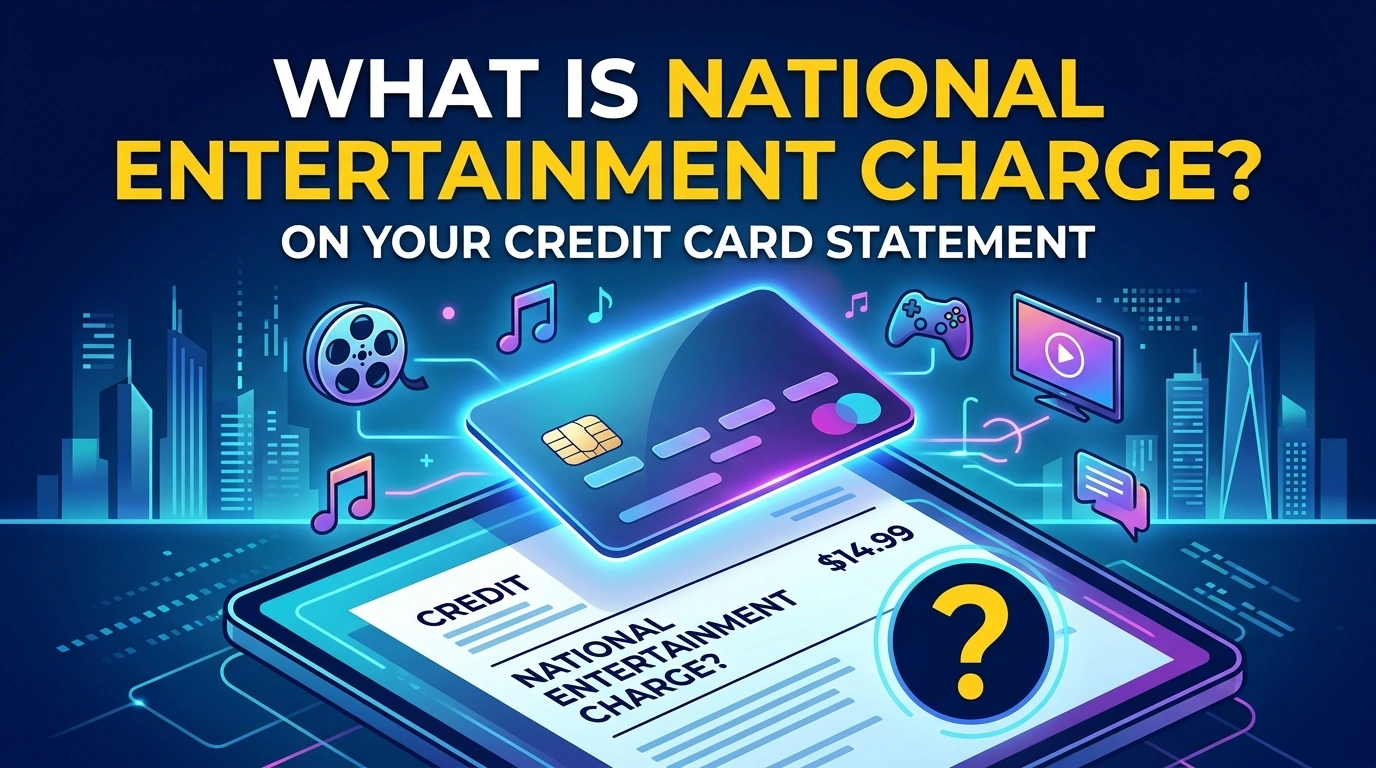
Finding an unfamiliar charge on your statement can feel unsettling. When the name is vague, the confusion only grows. A national entertainment charge on credit card is one of those entries that does not clearly explain itself. It does not point to a specific brand, and that uncertainty makes people question whether the charge is legitimate or something more serious.
In reality, this type of charge often has a logical explanation. However, understanding it requires knowing how modern payment systems label transactions and why those labels do not always match what you remember.
What Is National Entertainment Charge on Credit Card?
A National Entertainment charge is not a specific company. Instead, it is a generic billing descriptor used in payment systems to represent entertainment-related transactions.
This means the charge usually comes from a service connected to digital entertainment. It could be a subscription, a one-time purchase, or a platform that processes payments on behalf of another provider.
Because the name is broad, it does not directly reveal the source. That is why many users struggle to recognize it, even when the transaction itself is valid.
Why Does The Charge Appear on Your Credit Card Statement?
To understand this, you need to look at how payments are processed.
When you make a purchase, the system does not always display the brand you interacted with. Instead, it shows a backend identifier created during transaction processing. This identifier is called a merchant descriptor.
Several systems are involved in generating that descriptor:
- The merchant or service provider
- The Payment processor
- The acquiring bank
- The card network
During this process, the final name shown on your statement may be simplified, shortened, or replaced entirely. That is where labels like “National Entertainment” come from.
This happens more often with subscription platforms, bundled services, or third-party billing systems.
Which Services Are Usually Behind It
In most cases, this charge is linked to digital or subscription-based services. These services operate through automated billing systems, which often use generalized descriptors.
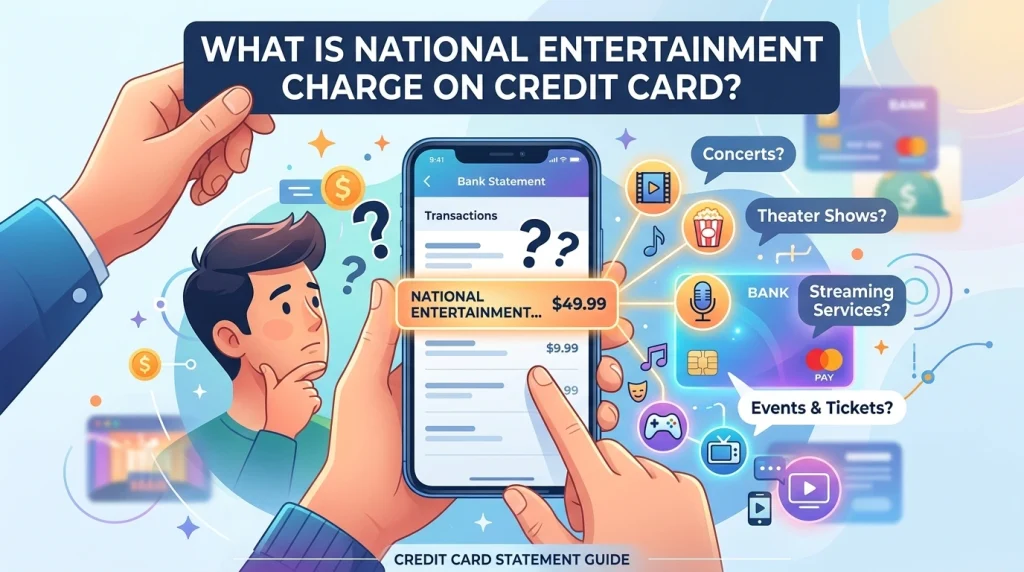
A national entertainment charge on credit card is commonly associated with streaming platforms, online gaming services, event ticketing systems, or digital content providers. Some platforms also rely on third-party billing companies, which further obscures the original merchant name.
In certain situations, even privacy-focused services use vague descriptors intentionally. This prevents sensitive or personal purchases from being clearly labeled on statements.
Is It Legitimate or Fraudulent?
This is the most important question, and the answer depends on context.
The charge is usually valid if it connects to a service you recognize. For example, if you recently subscribed to a streaming platform or purchased digital content, the charge may simply appear under a different name.
It is also a good sign if the amount matches a known subscription fee or follows a consistent monthly pattern. In many cases, users later realize the charge is tied to a service they forgot about.
When Should You Be Concerned?
There are situations where the charge deserves attention. If you cannot link it to any purchase, or if no confirmation email exists, it becomes more suspicious.
You should also be cautious if the charge appears multiple times without explanation or if the amount seems unusual. In these cases, the possibility of an unauthorized transaction increases.
Because the descriptor is generic, it is sometimes used in fraudulent activity. This does not mean every charge is unsafe, but it does mean you should verify it carefully.
How Do Payment Systems Create Confusing Charges Like This?
The confusion comes from the structure of modern payment systems.
When you pay for a service, the transaction passes through multiple layers. The merchant submits the request, the processor handles it, and the bank authorizes it. At each step, data can be adjusted or formatted differently.
By the time the transaction appears on your statement, the original brand name may be replaced with a system-generated descriptor. This descriptor prioritizes backend identification rather than user clarity.
That is why a familiar purchase can appear unfamiliar. The system is working correctly, but the labeling does not match user expectations.
How to Investigate The Charge in Simple Steps
Understanding the meaning behind the charge is only half the job. What matters next is verifying it properly. If a national entertainment charge on credit card looks unfamiliar, you need a clear process to trace it back to its source.
This is not about guessing. It is about systematically narrowing down possibilities until the transaction either makes sense or clearly needs to be disputed.
Step 1: Review the Charge Details Carefully
Start with the basics. Open your statement and look closely at the transaction entry.
Focus on the date, amount, and any additional reference codes. Even small details can provide context. For example, a charge that appears at the same time every month usually indicates a recurring subscription.
Also, check whether the transaction is marked as pending or completed. A pending charge may still change or disappear, especially if it is part of a temporary authorization.
Step 2: Cross-Check Your Entertainment Subscriptions
Next, connect the charge to your own activity.
Think about every platform you use for digital content. This includes streaming services, gaming subscriptions, or any paid content you accessed recently. Many people forget about services they signed up for weeks or months ago.
Log into your accounts and review billing history. Pay attention to subscription renewal dates. Often, the amount and timing will match the charge exactly, even if the name does not.
Step 3: Search the Billing Descriptor Online
If the charge still does not make sense, take the exact wording from your statement and search it online.
Generic descriptors like “National Entertainment” are commonly discussed by other users. Searching helps you identify patterns and see whether others have linked the same label to a specific service.
This step often reveals whether the charge is widely recognized or something unusual.
Step 4: Contact the Merchant or Platform (If Identified)
Once you suspect a specific service, go directly to the source.
Log into the platform and review your billing section. Look for active subscriptions, recent purchases, or stored payment methods. If needed, reach out to their support team.
Most platforms can confirm whether they processed the charge. If it is legitimate, they will provide details. If not, they can guide you further.
Step 5: Contact Your Credit Card Issuer
If the charge remains unclear after all checks, your next step is to contact your card provider.
Your Credit card issuer has access to deeper transaction data. They can trace the merchant ID behind the descriptor and give you more precise information.
If the charge appears suspicious, report it immediately. The issuer can flag the transaction, start an investigation, and may even issue a temporary credit during the process.
Can You Dispute The Charge?
Yes, and you should if the charge cannot be verified.
A dispute becomes necessary when the transaction is clearly unauthorized or does not match any service you used. This process is handled through what is known as the chargeback process.
Timing matters here. Most providers allow disputes within a limited window, usually around 60 days from the statement date. Acting quickly improves your chances of resolution.
When filing a dispute, be clear and precise. State that you do not recognize the charge and provide any supporting details. The bank will then investigate and communicate with the merchant.
How to Prevent Charges in Future?
Once you deal with one confusing charge, the goal is to avoid repeating the experience.
The most effective approach is awareness and control. Keep track of active subscriptions and review your statements regularly. Even a quick monthly check can prevent small charges from going unnoticed.
Setting real-time alerts through your banking app can also help. These alerts notify you instantly when a transaction occurs, giving you immediate visibility.
Another practical strategy is separating subscription payments onto a single card. This makes it easier to monitor recurring charges and identify anything unusual.
Managing Entertainment Subscriptions Without Losing Track
Digital services are designed to be convenient. That convenience often leads to accumulation. Over time, multiple subscriptions can stack up without you noticing.
To stay in control, review your subscriptions every few months. Cancel anything you no longer use. If needed, rotate services instead of keeping all of them active at once.
This approach not only reduces confusion but also helps manage your spending more effectively.
Frequently Asked Questions
What is national entertainment charge on credit card?
A national entertainment charge on credit card is a generic billing descriptor used for entertainment-related purchases or subscriptions. It does not represent a specific company, which is why it can appear unclear on statements.
Is it a scam?
Not always. In many cases, it is linked to a legitimate subscription or digital service. However, if you cannot recognize the charge, it should be investigated as it could also indicate unauthorized activity.
How can I identify who charged me?
You can identify the source by reviewing your subscriptions, checking transaction details, searching the descriptor online, or contacting your card issuer for merchant information.
How do I stop recurring charges on my credit card?
To stop recurring charges, you need to cancel the subscription linked to the payment. You can do this through the service provider or by contacting your bank to block future transactions.
Can someone else cause it?
Yes, especially if your card is shared or saved on multiple devices. Family members or unauthorized users may trigger subscriptions or purchases without your direct knowledge.
Should I cancel my card if I see this charge on credit card?
You should only cancel your card if the charge is confirmed to be fraudulent. In that case, your issuer will usually block the card and issue a replacement.
Final Takeaways
A national entertainment charge on credit card may look confusing, but it is usually explainable. Most of the time, it connects to a subscription or digital service processed through a generic billing system.
The key is not to ignore it. Always verify unfamiliar charges, follow a structured investigation process, and act quickly if something feels wrong.
Staying aware of your transactions is the simplest way to stay in control.