
What Is a Charge Off on a Credit Report?
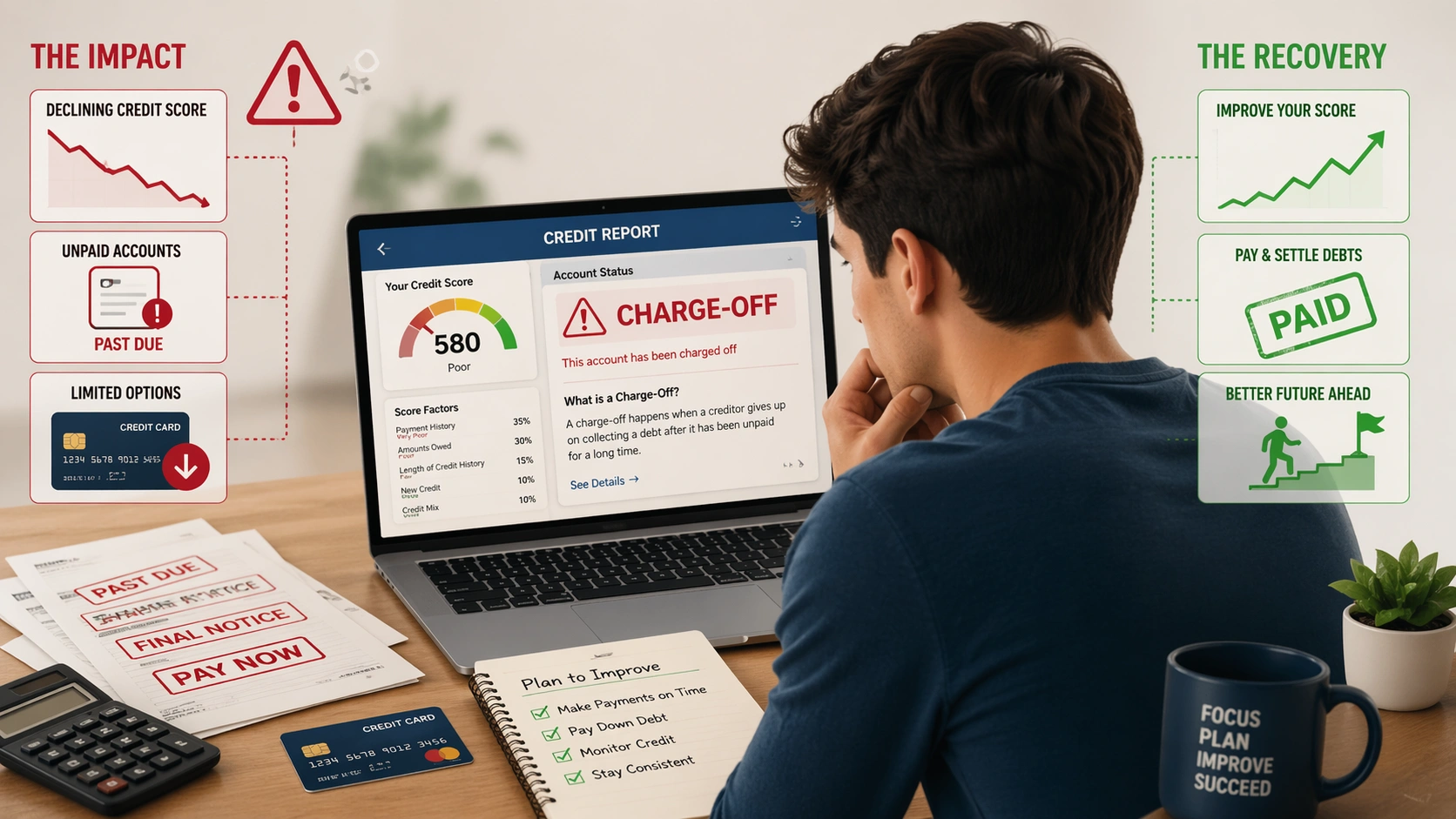
When people first see the term “what is a charge off on a credit report,” it often creates confusion and concern. It sounds like the debt is gone, but that is not the case. In reality, it signals a serious problem with missed payments.
A charge-off happens when a lender stops expecting payment after long delays. Even then, the balance remains unpaid, and the impact on your credit report can be significant and long-lasting.
Understanding Charge-Off
A charge-off is when a creditor marks your account as a loss after extended nonpayment. This usually happens after 180 days of missed payments. At this stage, the account is no longer active.
However, the key point is simple. The debt does not disappear. You are still legally obligated to repay the outstanding balance. The lender simply changes how the account is recorded in their system.
From an accounting perspective, this is called a bad debt write-off. The creditor moves the account from active status to a charged-off account. Meanwhile, your credit report records this as a negative credit entry.
This creates a serious delinquent account history. As a result, your credit score can drop sharply and stay affected for years.
How a Charge-Off Happens
A charge-off does not happen overnight. It follows a clear timeline based on missed payments and increasing delinquency.
Early Delinquency Stage
At first, you miss a payment. After 30 days, the account becomes delinquent. The creditor may send reminders or charge late fees.
By 60 or 90 days, the situation becomes more serious. The lender may increase contact attempts and report the missed payments to a credit bureau.
Severe Delinquency Stage
Once you reach 120 days without payment, the account enters a critical stage. The creditor now sees a high risk of nonpayment.
At around 180 days, the lender officially charges off the debt. This means they classify it as unlikely to be recovered.
Even though the account is written off as bad debt, the outstanding balance still exists. Your obligation to repay does not end.
What Happens After a Charge-Off
After a charge-off, the situation often becomes more stressful. The creditor may take further action to recover the unpaid amount.
In many cases, the lender transfers or sells the debt to a collection agency. This begins a new phase called the collection process.
Once this happens, you may receive calls, emails, or letters from debt collectors. Their goal is to recover the money on behalf of the creditor.
At the same time, your credit report may show both a charged-off account and a collection account. This can increase the negative credit score impact even further.
Ignoring the situation can make things worse. Collection efforts may become more aggressive, and in some cases, legal action can follow.
Impact on Credit Report and Score
A charged-off account has a strong negative effect on your credit report. It shows lenders that a serious delinquency happened and the debt was not repaid on time.
Once the creditor reports the charge-off, it becomes a permanent credit report entry for up to seven years. This timeline starts from the first missed payment that led to the default.
Your credit score can drop significantly after a charge-off. The exact drop depends on your previous credit history, but the damage is often severe.
Lenders use your payment history to judge your reliability. A charged-off account signals risk. As a result, getting approved for loans, credit cards, or even rentals becomes harder.
Even if you later repay the balance, the negative mark stays. However, over time, its impact slowly reduces if you build better credit habits.
Charge-Off vs Collection
A charge-off and a collection are related, but they are not the same. Understanding the difference helps you read your credit report correctly.
A charge-off happens when the original creditor writes off the debt as a loss. This is an internal decision made after long nonpayment.
Plus, a collection happens when the debt is passed to a collection agency. This can occur after the account is charged off.
In many cases, both entries appear on your credit report at the same time. One shows the original creditor’s loss, while the other shows ongoing recovery efforts.
This double reporting increases the credit score impact. It also makes your credit profile look riskier to future lenders.
How to Handle a Charged-Off Account
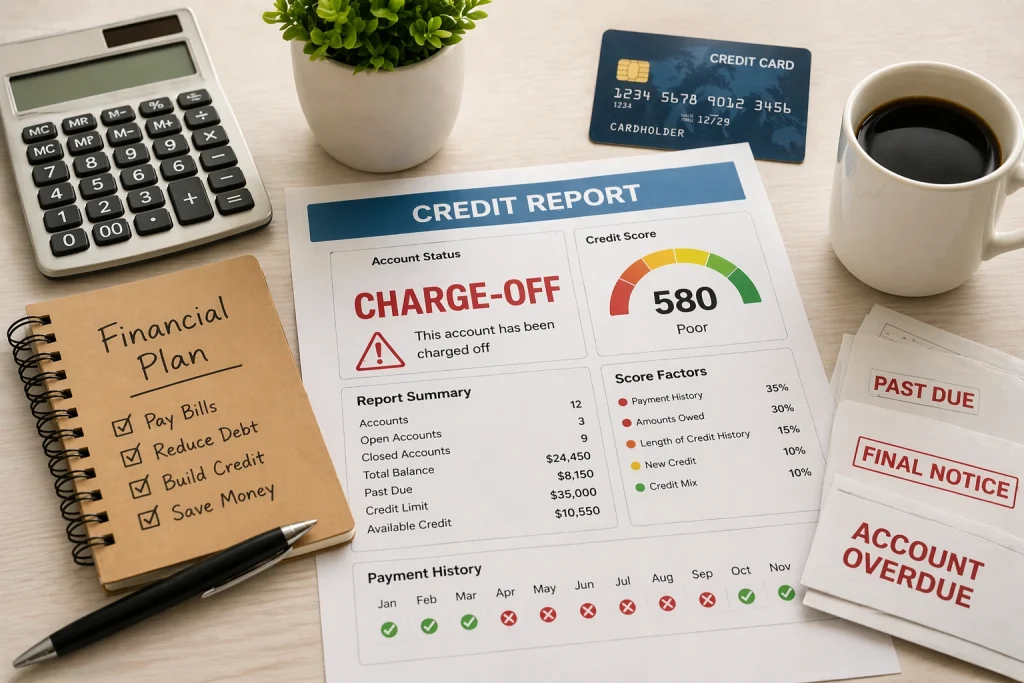
Dealing with a charged-off account requires a calm and clear approach. Ignoring it usually leads to more problems.
Repayment Options
You can choose to repay the full outstanding balance. This shows responsibility and improves how lenders view your profile over time.
Although the charge-off stays on your credit report, a paid status looks better than an unpaid one.
Settlement Strategies
If full payment is not possible, you can negotiate a settlement offer. This means paying less than the total amount owed.
Many creditors or collection agencies accept partial payments to close the account. Always get the agreement in writing before sending money.
Negotiation with Creditors
You can reach out directly to the creditor or collection agency. In some cases, they may offer a repayment agreement based on your financial situation.
Clear communication helps you avoid misunderstandings and protects you from unfair terms.
Risks of Ignoring the Debt
Ignoring a charged-off account can lead to ongoing collection activity. This may include repeated contact attempts and added stress.
In some cases, the creditor or agency may take legal action. This can result in court judgments or wage-related consequences depending on local laws.
Statute of Limitations
The statute of limitations defines how long a creditor can legally pursue a debt through the courts. This period usually ranges from three to six years.
It is important to understand that this timeline is different from credit reporting rules. A charge-off can stay on your credit report for seven years, even if legal action is no longer possible.
However, certain actions can restart the legal clock. Making a partial payment or agreeing to a new plan can reset the timeline.
Before taking action on an old debt, it is wise to understand your local laws. This helps you avoid unexpected legal risks.
How to Remove or Reduce the Impact
Removing a charge-off completely is difficult, but there are ways to reduce its effect on your credit profile.
Pay-for-Delete
Some people try to negotiate a pay-for-delete agreement. This means offering payment in exchange for removing the entry from the credit report.
Not all creditors agree to this, but it is still worth asking.
Disputing Inaccuracies
If the charge-off details are incorrect, you can dispute the record with a credit bureau. They must review and correct any verified errors.
Accurate reporting is your right, and fixing mistakes can improve your credit profile.
Goodwill Adjustments
In rare cases, you can request a goodwill adjustment. This works best if you had a strong payment history before a temporary hardship.
The creditor may agree to update or remove the negative entry as a gesture of goodwill.
Learn More: What Does DB Vertrieb GmbH Charge on Credit Card Mean?
Credit Rebuilding Strategies
The most reliable approach is to rebuild your credit over time. Focus on making on-time payments and keeping balances low.
Gradually, your positive payment history can reduce the impact of past mistakes.
Preventing Charge-Offs in the Future
Avoiding charge-offs starts with consistent financial habits. Small actions can prevent long-term damage.
Make payments on time every month. Even paying the minimum amount helps keep your account in good standing.
Monitor your accounts regularly. This helps you catch issues early and avoid falling behind.
If you face financial difficulty, contact your creditor early. Many lenders offer temporary relief options or adjusted payment plans.
Building discipline with credit use protects your financial future and keeps your credit report healthy.
Frequently Asked Questions
What is a charge off on a credit report and does it mean the debt is gone?
A charge-off on a credit report means the creditor has written the account off as a loss. However, the debt still exists and must be repaid.
You remain legally responsible for the balance even after the account is marked as charged off.
What is a charge off on a credit report and how long does it stay?
A charge-off stays on your credit report for up to seven years. This period begins from the first missed payment that caused the default.
Even if you pay the debt later, the record remains but may have less impact over time.
What is a charge off on a credit report compared to a collection?
A charge-off is recorded by the original creditor when they stop expecting payment. A collection happens when the debt is passed to a collection agency.
Both can appear together and increase the negative effect on your credit profile.
What is a charge off on a credit report and can it be removed?
A charge-off is difficult to remove unless it is reported incorrectly. You can dispute errors or try negotiating a pay-for-delete agreement.
Otherwise, the entry stays for the full reporting period while its impact slowly reduces.
What is a charge off on a credit report and should you pay it?
Paying a charge-off improves how lenders view your credit history. It changes the status from unpaid to paid, which is more favorable.
Although it does not remove the record, it helps rebuild trust over time.
Final Takeaways
A charge-off is one of the most serious negative marks on a credit report. It shows that a debt remained unpaid for a long period.
However, it does not mean the debt disappears. You are still responsible for repayment, and the impact on your credit can last for years.
Understanding how charge-offs work helps you respond correctly. With the right actions, you can reduce the damage and rebuild your financial stability over time.