Best Online Banking Services in 2025: What You Need to Know
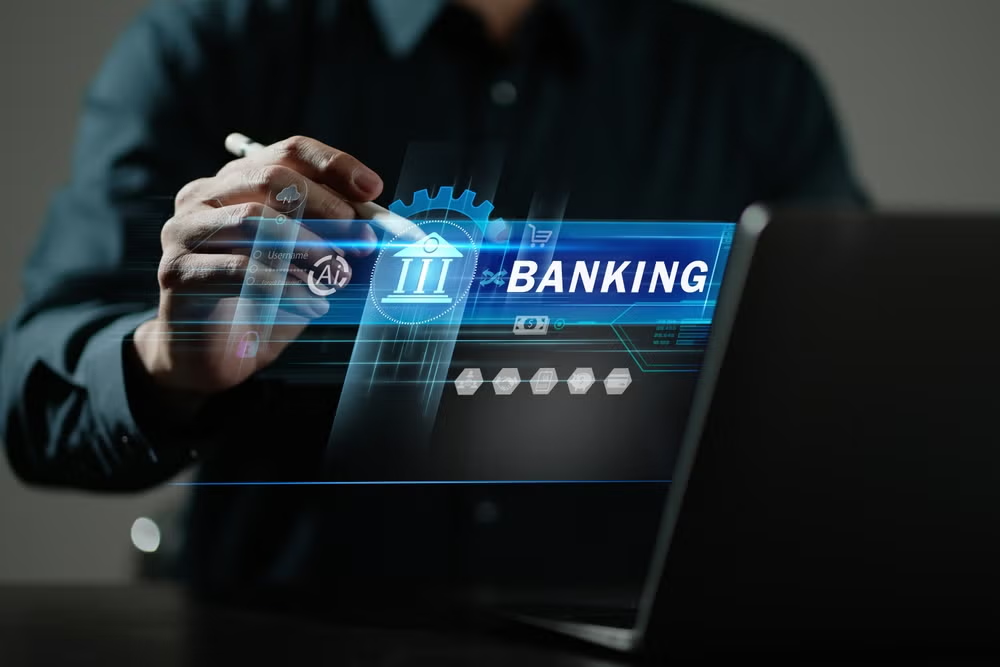
In today’s digital‑first world, choosing the right online banking service is more important than ever. As we move into 2025, banks and financial institutions are evolving rapidly — new technologies, shifting regulations and changing user behaviours mean that what counts as a “good” online banking service has shifted. Here’s what you need to know when selecting an online banking provider, and which features are becoming standard.
Why online banking is now central
Online banking isn’t just a convenience any more: it’s the primary mode of banking for many users. The global digital banking sector is forecast to generate a net interest income of around US $1.61 trillion in 2025.
This means digital banks and hybrid banks are investing heavily into their apps, services and infrastructure.
Meanwhile, people expect more than just balance checks and money transfers: they want seamless, real‑time, personalized experiences. The shift is clear: online banking is now competing on experience and value, not just account access.
Key features to look for in 2025
When you evaluate online banking services in 2025, keep an eye on the following features:
1. Real‑time Payments & Transfers
One of the biggest game‑changers is real‑time payment capability. With open banking architecture and faster payment rails, you should look for services that let you send and receive money instantly — no delays.
Additionally, look for low or no fees on transfers, good cross‑border support if you deal internationally, and mobile app or web access that is responsive and reliable.
2. Personalisation & AI‑driven insights
Gone are the days when a banking app was just a digital branch. In 2025, online banking services are using AI and machine learning to drive personalised recommendations, predictive offers and automated assistance.
For example, a good online banking service might proactively suggest ways to save, highlight unexpected spending, or tailor credit/loan offers rather than making you dig for them.
3. Open Banking & Ecosystem Integration
With regulators and fintech disruption, online banking is becoming more open, collaborative and embedded. Good services will integrate with third‑party apps (fintechs) via APIs, let you manage multiple financial products from one place, and give you the flexibility to move data easily.
Check if the bank’s platform supports data export/import, allows other financial apps to connect, or has partnerships that extend beyond standard banking.
4. Security & Trust
Security remains non‑negotiable. As banks become more digital, the risk of cyber‑threats goes up. According to research, phishing, malware and data breaches remain key risks in digital banking.
Look for features like multi‑factor authentication (MFA), biometric login (fingerprint, face ID), timely fraud alerts, and strong encryption. Also check the bank’s track‑record on outages or glitches — a digital service is only as good as its uptime.
5. Accessibility & User Experience
An online banking service may boast the best features, but if the user experience is clunky, onboarding is slow or support is weak, it becomes a hassle. In 2025, banks that combine digital convenience with human support (chat, phone) are winning. Also consider mobile app ratings, how quickly you can open an account, link other services, or get help when needed.
6. Value‑added services & sustainability
Many online banks are differentiating by offering bonus services: e‑wallets, savings/ investment tools, spending analytics, carbon‑tracking for green users, etc.
If you care about sustainability, look for banks that provide “green banking” options (e.g., financing with ESG focus), or reward conscious consumer behaviour.
How to pick the best one for your needs
With so many online banking services available, follow these steps to pick one that fits you:
- Define your priorities: Do you want low fees, global transfers, strong savings interest, budget tools, or integration with your other fintech apps?
- Check features against your needs: For example, if you frequently transfer internationally, test how their cross‑border transfer system and fees work.
- Test the app: Download the bank’s mobile app, review onboarding, see how intuitive the interface is, test customer support if possible.
- Read the fine print on fees & terms: Some online banks may charge for certain transactions, or limit third‑party integrations.
- Evaluate security & reliability: Check recent reviews or news for any outages, hacking incidents or complaints. A bank might have amazing features but poor reliability undermines trust.
- Consider long term: As online banking becomes more embedded in daily life, pick a service that can grow with you (investments, loans, business services, etc).
Why you should act now
The online banking landscape is shifting fast. Because of strong competition, many banks are rolling out better digital features, reducing fees and improving accessibility. If you wait, you may be locked into legacy services with higher costs or fewer integrations.
Also, regulatory frameworks are catching up: open banking, data portability and real‑time payments are likely to become standard, which means newer entrants or agile banks will have the edge.
Conclusion
In 2025, the “best online banking service” is no longer defined just by branch access or a decent web portal. It’s about agility, connectivity and meaningful services: real‑time payments, AI‑driven personalisation, ecosystem integration, strong security and a great user experience.
By carefully evaluating providers based on your specific needs and keeping an eye on emerging features, you can select an online banking service that not only keeps up with the times but helps you manage and grow your financial life. If you want, I can pull together top recommended online banking platforms globally (or specifically for Pakistan) and compare them side‑by‑side. Would you like that?